
Featured

These are the day’s featured stories on Media 1 Broadcasting

Featured

Baller Babe Angel Reese Makes Her Catwalk Debut...

Whether she’s on the court or on the catwalk, Angel Reese is always the star of the show. The Chicago Sky star made her way down the runway for the very first time on Wednesday, October 15, wearing two all-pink ensembles as she got her Victoria’s Secret Angel wings. For her first look, Reese walked like a pro in a coordinating white bra, garter, and panties set, completely embellished with pink flowers. She also had a pink shawl draped over her arms, which was covered in even more flowers to complete the look. For her second ensemble, the WNBA star rocked a simpler set, making her bombshell silver-and-white wings the star of the show. She wore a pink tee with a cheeky cut-out around her chest and a slit above her waist. The slits unveiled a matching pink bra and underwear, completing the look with strappy silver sandals and an undeniable mug. A week before stepping on the iconic stage, Reese opened up about her feelings leading up to the big moment, telling PEOPLE: “I’m ready to swap my Angel Reese 1s for heels on Wednesday night!” She also recalled her reaction to when she first got the news that she would be a Victoria’s Secret Angel, admitting, “I literally could not stop smiling!” “It’s such a surreal and full-circle moment — just last year I was in the audience manifesting being on that runway, completely inspired and in awe of all the powerful women walking down the runway, and now I get to return as an Angel,” she continued. “This will be an unforgettable night that I’ll forever be grateful for.” Reese went on to say that she was “so proud and excited” to become the first professional athlete to participate in the show. Another star who made their debut at last night’s show was Missy Elliott, who took to the runway to perform a medley of her songs, including the smash hit, “Work It.” She rocked an all-black, sparkly look for the occasion, contrasting all of the pink and white on the catwalk. Law Roach and Jodie Turner-Smith were also in attendance, sitting front row to watch Missy’s performance. The actress looked absolutely stunning in an ethereal white ensemble and clean girl glam, all tied up in a bow with a slick-back ponytail. The first model to take the runway was pregnant Jasmine Tookes, who looked absolutely ethereal in a netted dress and Victoria’s Secret’s wings made to look like a seashell. The star, who is pregnant with her second child, a boy, with her husband, Juan David Borrero, showed off all her curves while strutting down the runway, making her growing baby bump the star of the show. Former WNBA player Kysre Gondrezick has been embracing other opportunities since her departure from the Chicago Sky, walking the red carpet wearing vintage Mugler. The baller was there to show her support for fellow athletes Suni Lee and, of course, her former teammate Angel Reese. Another beauty who walked the iconic stage was model Anok Yai, who likened her preparation for the show to how an athlete trains. “I’ve been getting my ass handed to me seven days a week by my trainer,” she said in an Oct. 14 Instagram post. “I’m getting my back muscles ready for the wings. I’m passing my walk, and my ass is going to be nice and round.” Precious Lee also made her Victoria’s Secret Fashion Show debut, wearing a lacy pink set with black accents, complete with a fluffy, showgirl-esque headpiece. To see more looks, watch the Victoria’s Secret Fashion Show, in full, down below: Source: @angelreese 5 The post Real Life Angel: Baller Babe Angel Reese Makes Her Catwalk Debut At The 2025 Victoria’s Secret Fashion Show, Stunner’s Gorgeous Gams Garner Rave Reviews appeared first on Bossip.

Judges_Gavel
Featured, News

Federal Judge Rules Trump Admin’s RIF Layoffs Amid...

Just last Friday, White House budget director and Project 2025 architect Russell Vought announced that reductions-in-force (RIF) layoffs had begun across federal government agencies amid the government shutdown that GOP leaders and White House officials have desperately tried to pin on the Democratic Party, despite Republicans having a stranglehold on just about all three branches of government. Well, on Wednesday, the Trump administration ran into its first roadblock in its agenda to purge the federal government’s workforce, which it had already talked extensively about doing long before the shutdown. Yet another federal judge has told the Trump administration no. According to NBC News, U.S. District Judge Susan Yvonne Illston of the Northern District of California ruled in favor of two unions that sued the Trump administration last month, ahead of the shutdown, and after White House officials began issuing public warnings about its plan to start RIF layoffs. “The activities that are being undertaken here are contrary to the laws,” Illston said. “You can’t do this in a nation of laws.” Illston said that the Trump administration had “taken advantage of the lapse in government spending and government functioning to assume that all bets are off, the laws don’t apply to them anymore, and they can impose the structures that they like on the government situation that they don’t like” — and, boy, was she spot on about that. As we previously reported, during a Cabinet meeting last Thursday, President Donald Trump explicitly said he would be using the shutdown to target government programs started by Democrats. “We’re only cutting Democrat programs, I hate to tell you, but we are cutting Democrat programs,” Trump reportedly said. “We will be cutting some very popular Democrat programs that aren’t popular with Republicans, frankly.” So, not because the programs are wasteful. Not because he can prove Democrats are wiping their butts with American taxpayer money. Trump is simply gambling the livelihoods of federal workers and the greater good of the American people in a partisan political game where the house, the White House to be exact, makes all of the rules. From NBC: Illston said that she believed the plaintiffs can demonstrate that the Trump administration’s actions were illegal, in excess of authority and “arbitrary and capricious.” Assistant U.S. Attorney Elizabeth Themins Hedges argued that employment-related harms were “reparable” and that losing employment was not an “irreparable harm.” But the judge issued a temporary restraining order, saying it would go into effect immediately. She said she plans to issue the order in writing later Wednesday. An earlier filing from the government stated that the administration had begun laying off at least 4,000 workers. Skye Perryman, president and CEO of Democracy Forward, said that Trump “seems to think his government shutdown is distracting people from the harmful and lawlessness actions of his administration, but the American people are holding him accountable, including in the courts.” Perryman rightfully said Trump’s bid to target federal workers is “a move straight out of Project 2025’s playbook,” referring to the Heritage Foundation’s plan for America that Trump often claimed he “had nothing to do with” before implementing virtually all of its policies, and then, eventually, introducing Vought as his Cabinet member “of PROJECT 2025 Fame.“ Shout out to the good judge for standing with the workers and against this anti-worker administration. We’re going to need more like her to stand up, especially during this shutdown, which House Majority Speaker Mike Johnson recently warned barreling toward one of the longest shutdowns in American history” — which, if true, means it would surpass the longest government shutdown in nearly half a century, which came during the first term of, you guessed it, Donald J. Trump. SEE ALSO: Federal Workforce Layoffs Begin Amid Government Shutdown The Government Shutdown Has Officially Happened: What Happens Now, And Who Is To Blame?

trey_reed
Featured

The Unanswered Questions Surrounding De’Martravion “Trey” Reed’s Death:...

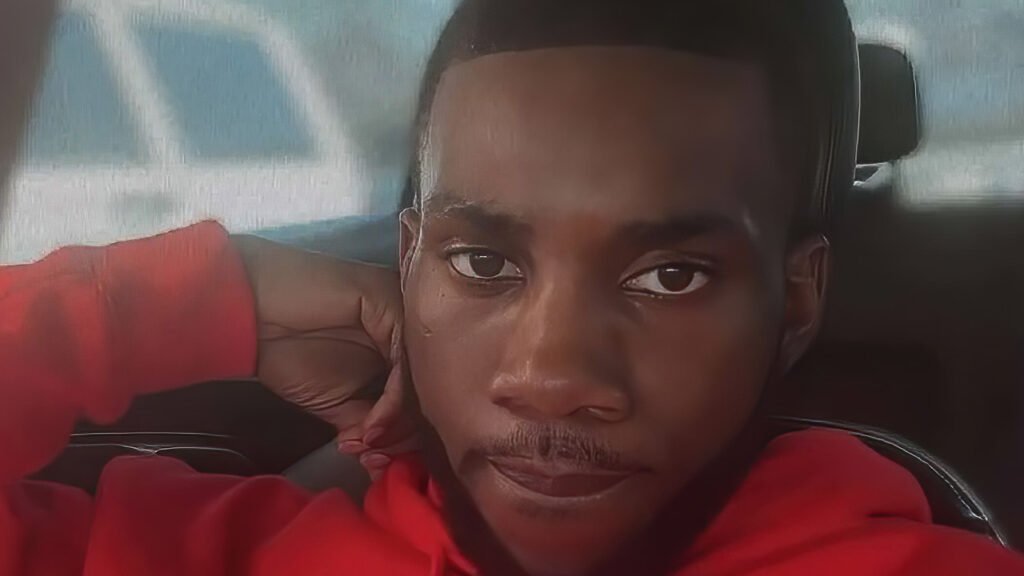
Source: Alexis Reed / Alexis Reed The Waiting and the Weight of Uncertainty Weeks have passed since the death of De’Martravion “Trey” Reed, and still, there is no definitive verdict. The public waits for answers: the release of the second autopsy, official statements from authorities, and words that might bring comfort to a grieving family. In the absence of clarity, rumors, mistrust, and speculation have filled the void. Online conversations, often driven by grief and outrage, have turned into a whirlwind of misinformation that adds pain to those already mourning. A History That Shapes Our Doubt For many Black Americans, disbelief in the face of a reported suicide by hanging is not mere suspicion—it’s a historical reflex born of centuries of racial violence. During the lynching era, it was not uncommon for the deaths of Black men to be ruled as suicides to cover up murders committed by white mobs or law enforcement. The Civil Rights and Restorative Justice Project at Northeastern University has documented dozens of such cases between 1930 and 1956. This collective memory lingers. When Trey Reed’s death was announced as a “suicide,” it resonated with a painful pattern—one that reminds us how often Black death has been misrepresented, minimized, or dismissed. The Modern Spectacle of Grief and Rumor In 2025, the public square has moved from courthouse steps to social media feeds. Unverified details, viral posts, and sensational headlines spread rapidly. Claims of “broken bones,” “foul play,” or “cover-ups” circulate before facts are confirmed. This digital rumor mill, while fueled by legitimate pain and distrust, often overshadows the victim and the family’s humanity. The story becomes a spectacle—one that extracts grief for clicks and shares, rather than centering compassion and truth. If Foul Play Is Found—Justice Must Follow Should the second autopsy confirm evidence inconsistent with suicide—signs of trauma, struggle, or manipulation—the call for justice must be loud and sustained. Accountability would need to reach beyond individuals to include institutions: law enforcement, campus security, and the media. Who shaped the initial narrative? Who withheld evidence or delayed transparency? These questions demand answers, not for the sake of outrage, but for truth and reform. If Suicide Is Confirmed—We Must Confront the Stigma If the autopsy confirms that Trey Reed took his own life, that truth carries its own urgent call. It would require a collective reckoning with the realities of mental health in Black communities. For too long, discussions of depression, trauma, and suicide among Black men have been shrouded in silence and stigma. Accepting the possibility of suicide does not diminish the tragedy—it expands it. It challenges us to confront despair, alienation, and the systemic pressures that weigh heavily on young Black lives. Rejecting Silence and Spectacle Alike Regardless of the final report, one thing must remain central: Trey Reed was a son, a student, and a human being. His life deserves dignity beyond rumor or sensationalism. As a society, we must resist both erasure and exploitation—the twin dangers of silence and spectacle. Whether this tragedy stems from violence or internal pain, the path forward demands transparency, empathy, and care. Let Grief Lead, Not Speculation When the full truth of Trey Reed’s death emerges, may it be met with mourning before judgment. Let the rumors end, the lies fall away, and the healing begin. Grief, when acknowledged and shared with honesty, can be the starting point of justice. Before we frame explanations or assign blame, we must first recognize the humanity that was lost—and the community that continues to ache for truth. By Dr. Stacey PattonAward-winning journalist and author of “Spare The Kids: Why Whupping Children Won’t Save Black America” and the forthcoming “Strung Up: The Lynching of Black Children in Jim Crow America.” SEE ALSO: When Humbling Black Women Is A Political Game Black Unemployment Is Not An Accident, It Is A Racial Purge

Nicki_Minaj_-_Flickr_-_Eva_Rinaldi_Celebrity_and_Live_Music_Photographer_(12)
Featured

Nicki Minaj Denies Losing Her Home and Calls...

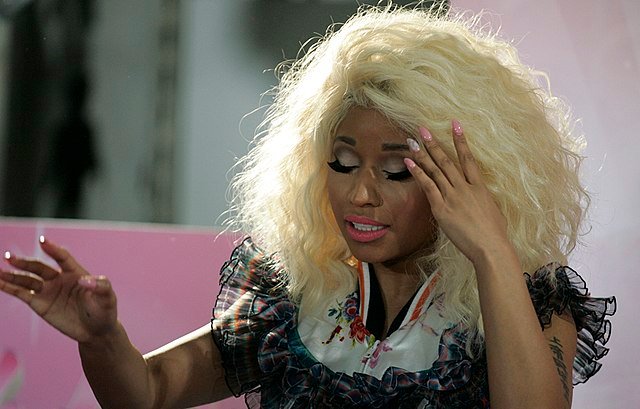
Nicki Minaj is setting the record straight after reports claimed that her Los Angeles mansion was at risk of being sold over an unpaid debt. The “Super Bass” rapper fired back at the allegations — and took aim at Roc Nation once again. Reports Claim Nicki Minaj’s Home Is in Jeopardy On October 14, Us Weekly reported that Nicki Minaj and her husband, Kenneth Petty, were allegedly facing the possible sale of their Los Angeles mansion due to an unpaid legal debt. The situation stems from a lawsuit filed by Thomas Weidenmuller, who was reportedly awarded $503,000 earlier this month after alleging that Petty assaulted him during a 2019 concert. According to court documents, Weidenmuller asked the court to order Minaj’s home to be sold to collect the money owed. The 2019 Incident That Sparked the Lawsuit Weidenmuller’s lawsuit claims that the incident occurred on March 22, 2019, while he was working security at one of Nicki’s shows. He alleges that a fan broke through the barricade and reached the stage, leading to a heated exchange between Minaj and a female guard. When Weidenmuller tried to calm the situation, Nicki allegedly became upset and informed Petty about the incident. The lawsuit claims that Petty later summoned Weidenmuller to Minaj’s dressing room, where Petty allegedly struck him “without warning,” causing severe facial injuries that required jaw surgery. Weidenmuller’s attorney said, “Although it is regrettable that the extraordinary measure of forcing the sale of Minaj’s dwelling is required, that result is entirely the product of her intransigence in not making payment.” He added that Minaj’s estimated net worth of $150–190 million makes her “highly capable” of paying the judgment. Nicki Minaj Fires Back: “Roc Nation’s Behind This” Following the reports, Nicki Minaj took to TikTok and X (formerly Twitter) to respond — and once again accused Roc Nation and its CEO Desiree Perez of being behind a smear campaign. On TikTok, she posted a screenshot of Page Six’s coverage with a bold caption directed at Perez: “DESIREE PEREZ YOU GOT BIGGER FISH TO FRY BOOKIE. Conspiracy. False imprisonment. Civil rights violation. Oh cock nation y’all suck.” She continued her rant, claiming media outlets like Us Weekly and Page Six were “on Roc Nation’s payroll.” Later on X, Minaj tweeted: “Dear US WEEKLY & PAGE 6, you just f**ked yourselves.” Fans Rally Behind Nicki Minaj Minaj retweeted fans defending her, including one who wrote: “I will NEVER trust a newspaper or blog who allows fabricated stories just because they’re on someone’s payroll.” She continued firing off posts criticizing Desiree Perez and Jay-Z, and later shocked fans by saying she’s done with music: “Ok I’m not going to put out the album anymore. No more music. Hope you’re happy now. Bye Barbz. Love you for life.” Nicki Minaj Denies Being Served in the Lawsuit In her final posts, Nicki Minaj claimed she was never personally served with court papers and blamed a former business manager for the confusion. “The papers were given to a business manager who never told me,” she wrote. “That same business manager STOLE from me many times… then was accused of killing a woman and leaving her in a hotel room.” Minaj added that she has “evidence” to back up her claim and suggested that misinformation has fueled the controversy. Final Thoughts While the legal case continues, Nicki Minaj is adamant that the reports are false and that her home is not in jeopardy. The rapper’s latest outburst reignites her long-standing feud with Roc Nation, proving once again that she’s not afraid to call out her industry rivals.

little_white_lie
Featured

The White Media’s Latest Lie: Pretending Black Unemployment...

For months, we’ve been flooded with stories about the sudden rise in Black unemployment. Nearly every one of them, from Politico to Axios to Time Magazine to MSNBC News, has focused on Black women. We’ve seen the same template: sympathetic portraits of college-educated women juggling multiple jobs, stuck in low-wage positions, or pushed out of professional spaces they helped build. Each piece comes wrapped in the same language of concern with phrases like “economic headwinds,” “policy shifts,” and “labor market cooling.” But beneath that polite vocabulary lies a truth most of these outlets refuse to say out loud: what’s happening to Black workers isn’t a downturn, it’s a pattern hiding in plain sight and a deliberate racial targeting. The latest example came from the New York Times in a piece titled Black Unemployment Is Surging Again. This Time Is Different. The article, published over the weekend, walks readers through a familiar scene featuring a young Black woman with a degree and drive, struggling to find a job that matches her education. Her story is framed in soft light and muted tones, a tragic inevitability rather than a predictable outcome of racist economic policy. The Times offers the usual explanations: high prices, expired subsidies, and slow hiring. But these aren’t natural forces. They’re choices. The Trump administration deliberately ended pandemic-era subsidies that had cushioned working families, froze federal hiring, and ordered federal contractors to stop pursuing racial equity. Each of those moves directly undercut the modest racial gains made during the recovery when Black wages rose, unemployment dropped to record lows, and household wealth briefly ticked upward. Now, in just four months, Black unemployment has jumped from 6% to 7.5%, while white unemployment has dipped slightly to 3.7%. That’s not an economic “imbalance.” That’s a recalibration. The Old Game with New Excuses Every time Black Americans start to inch toward economic stability, when homeownership increases, wages climb, and the wealth gap narrows, white America finds a new excuse to hit the brakes. Sometimes it’s “budget restraint.” Sometimes it’s “fiscal responsibility.” Sometimes it’s “market correction.” But the meaning never changes: Black progress must be temporary. Every economic cycle becomes a racial reset. Every recovery becomes a reminder of where we’re allowed to stand. The federal government has historically been one of the few employers where Black workers could thrive without the open discrimination of the private sector. Those jobs provided stability, pensions, and a path into the middle class. So when this administration cuts over 200,000 federal positions, it isn’t trimming fat, it’s gutting one of the few remaining ladders of upward mobility for Black families. A July “deferred-resignation” program had already nudged over 154,000 federal employees to resign under the guise of voluntary departure.  Now, overlay that with a government shutdown that is being used as legal cover to fire thousands more. The White House has begun executing substantial layoffs amidst the funding impasse, formally initiating Reduction-in-Force (RIF) procedures that target more than 4,000 federal workers so far. Many agencies like Health and Human Services, Education, Treasury, and Homeland Security are being told to identify roles deemed non-essential and purge them. It’s a multi-front assault: resignations, firings, reclassifications, freezes—in total, shrinking the federal civil service by design. Let’s keep it real, this isn’t a temporary furlough. These are job eliminations, on top of the sweeping federal purge that’s already erased hundreds of thousands of government workers from payrolls. And there’s no credible talk of restoring them. Even as Vice President Vance warned of “deeper cuts ahead,” there’s no plan on the table to rebuild. In practice, the shutdown is intensifying the racial purge. When the shuttering of government becomes the pretext for targeting Black federal workers, the very people who relied on these jobs as anchors, this is not governance. It’s racial culling. And by refusing to speak of these cuts in racial terms, the institutional press lets the purge pass as procedural. None of this is accidental. It’s economic retribution, wrapped in the language of governance. Journalism That Washes Away Intent What’s most infuriating isn’t just the policy itself.  It’s how the press covers it. The Times and other legacy outlets document the pain while protecting the perpetrators. They don’t name them.  They don’t call a thing a thing. They use neutral verbs for violent acts. Black unemployment “surged.” Wages “stagnated.” Conditions “deteriorated.” The story writes itself as if no one made these decisions and as if racism were an atmospheric condition instead of an agenda. Behind every “freeze” is a signature. Behind every “cut” is a hand. Behind every “policy shift” is an ideology that sees Black labor as expendable and Black stability as an economic threat. That’s why these stories always end the same way: a photo of a Black woman looking out a window, a quote about resilience, and no mention of rage. The coverage humanizes suffering but sanitizes the cause. But that truth doesn’t make it into the paper. Instead, we get a familiar tableau: a photo of a young Black woman, eyes soft, framed by natural light, gazing out of a window into the distance of her uncertainty. Her name becomes a headline prop, her anxiety converted into empathy content. She’s presented as a symbol of endurance, not a casualty of political violence. This is how the New York Times uses Black pain as texture, as visual proof that it cares enough to notice but not enough to indict. The story centers her struggle while erasing the system that caused it. It teaches readers to admire her perseverance while accepting her suffering as natural. The camera lingers on her posture, not her power. The quotes chosen make her sound hopeful, humble, never furious. Rage would make the story too complicated. Rage would demand accountability. And what does that do to us, the readers, the people living inside the crisis instead of reading about it? Each of these stories, dressed in sympathy but stripped of politics, becomes another drip in the slow psychological erosion of

Angie Stone_D’Angelo_Michael Archer II_Michael Archer II’s
Featured

D’Angelo & Angie Stone’s Son Michael Shares Heartfelt...

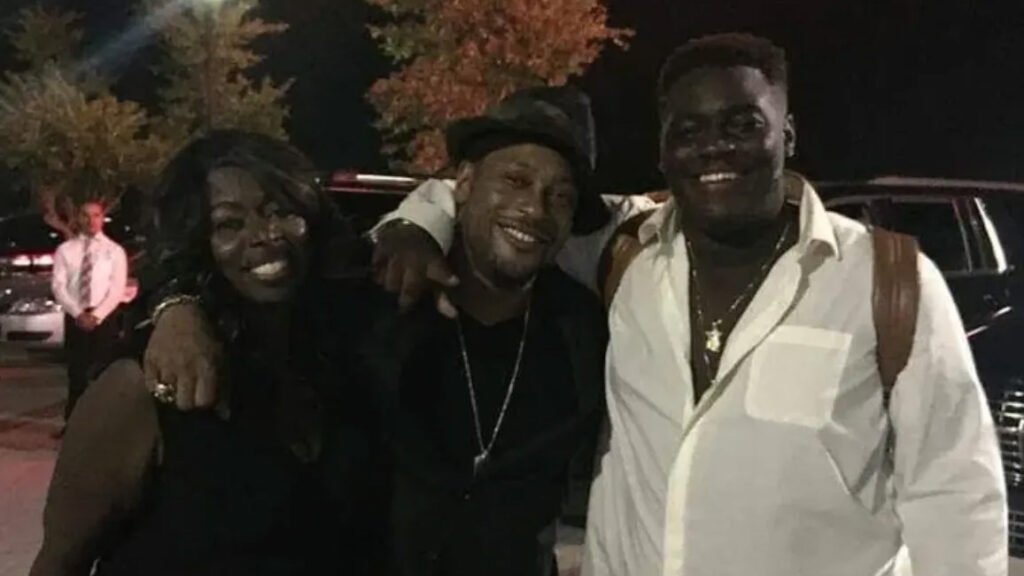
Just hours after his father D’Angelo’s unfortunate passing was confirmed, Michael Archer II paid tribute to his dad while reflecting on losing his mother, Angie Stone, just 7 months ago. Source: Angie Stone, D’Angelo, and Michael Archer II – Michael Archer II’s own photo “I am grateful for your thoughts and prayers during these very difficult times, as it has been a very rough and sad year for me,” said Archer in a statement shared with BOSSIP. “I ask that you please continue to keep me in your thoughts as it will not be easy, but one thing that both my parents thought [sic] me was to be strong, and I intend to do just that.” As previously reported, Archer’s Neo-Soul legend dad, D’Angelo (born Michael Eugene Archer), died on Tuesday, Oct. 14, after being diagnosed with pancreatic cancer. He was 51.   In a statement shared with BOSSIP, a representative for the D’Angelo Estate said, “The shining star of our family has dimmed his light for us in this life…After a prolonged and courageous battle with cancer, we are heartbroken to announce that Michael D’Angelo Archer, known to his fans around the world as D’Angelo, has been called home, departing this life today, October 14th, 2025.” The statement continued: “We are saddened that he can only leave dear memories with his family, but we are eternally grateful for the legacy of extraordinarily moving music he leaves behind. We ask that you respect our privacy during this difficult time but invite you all join us in mourning his passing while also celebrating the gift of song that he has left for the world.” PEOPLE magazine offered an update on D’Angelo’s passing after speaking with a source confirming that his declined in recent weeks. “He was in hospice for two weeks but had been in the hospital for months.” Angie Stone Was Killed In A Car Crash In March D’Angelo’s passing comes just months after the death of his former partner and Michael’s mother, singer Angie Stone, who tragically died earlier this year.   In March, Stone was involved in a fatal car accident following a performance in Mobile, Alabama. As previously reported, she and several others were en route to Atlanta when the Mercedes-Benz Sprinter van they were traveling in reportedly lost control in Montgomery County, Alabama. Stone’s death was just one day before Michael’s birthday. BOSSIP is sending sincere thoughts and prayers to Michael Archer II.  

christians_slavery
Featured

How Christian Slaveholders Used the Bible to Justify...

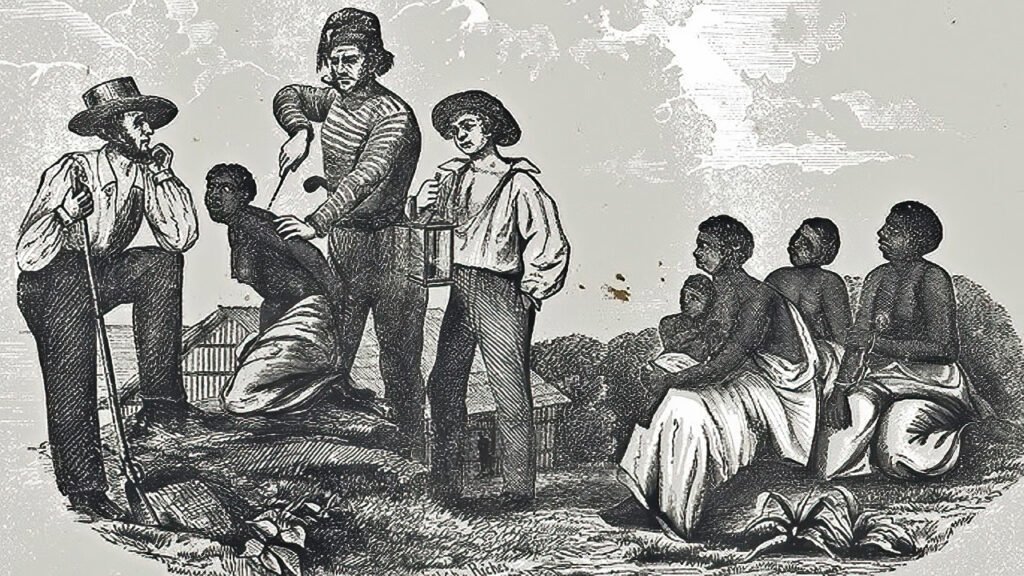
Religion has always played a powerful role in shaping societies. Unfortunately, it has also been used to defend injustice. One of the darkest examples in American history is how Christian slaveholders used the Bible to justify slavery. By twisting scripture, they built a false moral foundation for one of humanity’s greatest crimes. Biblical Justifications for Slavery During the 18th and 19th centuries, pro-slavery Christians repeatedly quoted certain Bible verses to defend their position. They often cited Ephesians 6:5, which reads: “Slaves, obey your earthly masters with respect and fear, and with sincerity of heart, just as you would obey Christ.” Another verse used was Colossians 3:22, which reinforced similar language. These passages, taken out of context, were interpreted to mean that slavery was sanctioned by God. Even more troubling, many white preachers referenced Genesis 9:25–27, known as the “Curse of Ham.” They claimed Africans were descendants of Ham and thus destined to be servants. This distorted reading provided false moral and religious justification for racial enslavement. In reality, these interpretations ignored the broader Biblical message of love, mercy, and equality. They reduced a complex, ancient text into a tool of control and exploitation. Religion as a Tool of Control Christianity was not only a justification for slavery — it became a means to control the enslaved. Many enslaved Africans were converted to Christianity, but their exposure to scripture was heavily censored. Slaveholders promoted a version of the Gospel that emphasized obedience and submission while erasing verses about freedom and justice. For example, slave Bibles were printed with major portions of the Old and New Testaments removed — especially any stories about liberation, like the Exodus or Galatians 3:28, which says: “There is neither slave nor free, for you are all one in Christ Jesus.” These omissions weren’t accidental. They were part of a deliberate effort to prevent enslaved people from finding spiritual or social empowerment through faith. By controlling what scriptures were taught, slaveholders weaponized religion to maintain power and suppress rebellion. Abolitionist Christianity and the Fight for Truth Not all Christians accepted this corrupted theology. In fact, many abolitionist leaders used the same Bible to argue for freedom and equality. Figures like Frederick Douglass, Harriet Beecher Stowe, and William Lloyd Garrison saw slavery as a direct violation of Christian morality. Douglass, who escaped from slavery, famously said there was a difference between “the Christianity of this land” and “the Christianity of Christ.” He condemned the hypocrisy of those who prayed on Sunday and whipped slaves on Monday. Abolitionist preachers pointed to scriptures that celebrated liberation and condemned oppression — from Isaiah’s call for justice to Christ’s teachings about love and mercy. Their voices helped awaken the moral conscience of the nation. The Lasting Impact on American Christianity The use of the Bible to justify slavery left deep scars on American Christianity. Churches in the South and North split over the issue, and those divisions have echoed for generations. Even today, scholars and theologians continue to examine how these distorted interpretations contributed to systemic racism and inequality within religious institutions. Understanding this painful history allows believers to confront and dismantle the lingering effects of theological racism. What We Can Learn Today The story of how Christian slaveholders used the Bible to justify slavery is more than a history lesson — it’s a warning. It shows how sacred texts can be misused when people seek to justify their own power and prejudice. True faith, rooted in love and compassion, challenges oppression rather than supports it. When read in full context, the Bible calls for justice, mercy, and equality — values that stand in direct opposition to slavery and racism. Conclusion The Bible was never meant to be a weapon of oppression. Yet, for centuries, Christian slaveholders turned it into one. By understanding this dark chapter in history, modern readers can ensure that scripture is interpreted through the lens of truth and love. Faith should unite, not divide. It should liberate, not enslave. That’s the enduring message that outlives even the darkest distortions of the past.

R&B singer D’Angelo
Featured

Soul legend and “Brown Sugar” hitmaker D’Angelo has...

Soul legend and “Brown Sugar” hitmaker D’Angelo has died. He was 51. On Tuesday, Oct. 14, TMZ reported that D’Angelo (born Michael Eugene Archer) confirmed news of his death after a private battle with pancreatic cancer. DJ Premier, who collaborated with him on the 1998 track “Devil’s Pie,” shared a post via X on Oct. 14 confirming the news.”Such a sad loss to the passing of D’angelo. We have so many great times. Gonna miss you so much. Sleep Peacefully D’ Love You KING,” he wrote. The Richmond-born son of a Pentecostal minister began playing the piano at the age of 3 and by 5 years old, he was playing the instrument with his father at church. A few years later, he began playing the piano at his grandfather’s Pentecostal church. Growing up, he and his two cousins formed the group Three of a Kind and began performing at local talent shows. By 16, he formed another band called Michael Archer and Precise with his brother, Luther. That year, D’Angelo landed a slot during Amateur Night at the Apollo, where he sang “Feel the Fire” by Peabo Bryson. While he didn’t win at the time, he returned to the stage the following year to perform “Rub You the Right Way” by Johnny Gill in 1991 and took the first place. With his monetary prize, he returned to Richmond, bought a four-track recorder and started writing what would become most of the songs that made up his 1995 debut album Brown Sugar. He landed a record deal two years later. Brown Sugar peaked at No. 4 on the U.S. Billboard Top R&B Albums chart went platinum within a year of its release. It also earned D’Angleo four Grammy Award nominations. In 2000, D’Angelo released his sophomore album Voodoo, which peaked at No. 1 on the U.S. Billboard Top R&B Albums chart and the U.S. Billboard 200 chart. The album also won a Grammy Award for Best R&B Album and his song “Untitled (How Does It Feel)” received Best Male R&B Vocal Performance, along with a nomination for Best R&B Song.

640px-Police_car_with_emergency_lights_on
Featured

Lawsuit Filed After Black Postal Worker Dies In...

The family of Kingsley Fifi Bimpong has filed a lawsuit against the city of Eagan after the 50-year-old Black U.S. postal worker was not provided medical care for a stroke and died while in police custody. The newly filed federal lawsuit accuses Eagan, Minnesota, police and Dakota County jail staff of demonstrating “deliberate indifference” after officers ignored clear signs that Bimpong was having a massive stroke — instead assuming he was intoxicated. According to the complaint, Bimpong left his shift with the U.S. Postal Service early, around 10:42 p.m. on Nov. 16, 2024, due to a headache and decreased vision. While driving home, he attempted a left turn at a red light and drove into oncoming traffic, hitting the center median in the process. When officers approached Bimpong, who was still wearing his USPS uniform, he was reportedly confused, disoriented, and unable to state where he lived or worked—the classic and undeniable symptoms of a severe stroke. Despite the medical emergency, Bimpong was arrested and accused of being under the influence before being thrown in jail, spending nearly six hours in custody as his symptoms continued to worsen and his body and mind shut down. According to the lawsuit filed by civil rights attorney Katie Bennett, Sergeant Joseph Moseng summoned Officer Martin Jensen, a certified Drug Recognition Evaluator (DRE) trained to tell the difference between intoxication and medical crises, who allegedly dismissed his training, telling another officer that a full evaluation would be “a whole bunch of time wasted.” DRE protocol involves a 12-step evaluation to determine a person’s cause of impairment, which includes a check for vital signs and three separate checks for pulse. However, when Moseng requested this evaluation, Jensen only partially completed three of the steps and did not take Bimpong’s pulse once, the complaint alleges. When asked whether Bimpong should be taken to a hospital, he allegedly replied, “For what?” Instead of helping Bimpong receive medical attention he desperately needed, the officers arrested Bimpong on suspicion of DWI, a decision that transformed a medical crisis into a fatal torture. At the police station, his condition worsened as his signs of distress were continuously ignored. An emergency medical provider asked officers if they were planning to take him to the hospital, but the responding officer declined, saying, “It’s a whole thing.” Instead, officers transported Bimpong to the Dakota County Jail, the lawsuit says. Body camera footage captures Moseng starting to ask, “Is this dude having a stro—” before Jensen muted his mic—cutting off the word “stroke.” The lawsuit states that when Bimpong arrived at the jail, he lost his balance and had trouble walking, but his booking paperwork said he did not require further evaluation. Bimpong was reportedly placed in a cell with floor-to-ceiling windows, giving officers a clear view of Bimpong. Video surveillance from inside his cell shows him stumbling to the toilet, where he sat for several minutes before falling backward onto the floor. He remained there, rolling around in distress for hours. “He’s having more difficulty walking, he has muscle issues, he’s drooling, just continues to deteriorate, and then gets taken to jail and spirals as he’s lying on the floor, clearly suffering in front of the corrections officers, it’s just heartbreaking to see,” Katie Bennet said. Dakota County Jail procedure requires that all inmates be observed by a staff member at least once every 30 minutes. Multiple officers are recorded as observing Bimpong struggling on the ground for hours, while marking his status as “OK” in the jail’s system, the lawsuit says. “[He] ends up losing control of his bladder, rolling around in his own urine,” Bennett continued. “Clearly in pain and struggling for hours when no one is helping him.” After three hours of negligence, a nurse entered Bimpong’s cell, where he was found cold to the touch and unresponsive, the lawsuit states. The nurse administered Narcan three times with no effect, believing he’d overdosed. When paramedics finally arrived, Bimpong’s blood pressure was a deadly 240/216, signaling a hypertensive crisis. By the time the father of one was transported to the Dakota County Jail around 1 a.m., his stroke was catastrophic. His alcohol and drug screens came back negative, and a CT scan showed a hemorrhage and swelling in his brain. Bimpong was declared brain dead on Nov. 18, 2024, and taken off a ventilator the next day. Attorney Katie Bennett described the case as “one of the worst jail deaths we’ve ever seen,” adding, “The police and correctional officers acted on incorrect and unfounded assumptions about Kingsley as justification for treating a person suffering from classic stroke symptoms with callous indifference that resulted in his death. The shocking, deliberate indifference from local authorities stripped Kingsley of his last safeguard: the right to basic medical care. No one should lose their life in custody simply because those responsible choose silence and neglect over compassion and responsibility. A jail cell should never become a death sentence simply because cries for help were ignored.” Following Bimpong’s death, an investigation by the Minnesota Department of Corrections found that jail staff were behind on mandatory CPR and first-aid training, and that well-being checks were performed improperly. The jail also violated state law by failing to document medical information or conduct a mental health screening. Despite the overwhelming evidence of negligence, the City of Eagan defended its officers, releasing a statement claiming Bimpong “was not exhibiting an objectively serious medical condition that was obvious to lay persons at the time he was in custody.” That statement stands in stark contrast to video evidence and witness accounts describing his visible distress. The family’s federal lawsuit, filed by Robins Kaplan LLP, seeks $120 million in damages and policy changes within both the Eagan Police Department and Dakota County Jail. The suit names three Eagan officers and seven correctional officers as defendants, citing violations of Bimpong’s Eighth and Fourteenth Amendment rights. Kingsley Bimpong’s story is not an anomaly — it’s a symptom of a national crisis. Studies repeatedly show

Inside_Airport
Featured

Airports Reject Trump Administration Propaganda Video Blaming Democrats...

The Rise of Real-Life Political Propaganda We’ve all seen dystopian movies where governments flood citizens with propaganda through giant screens and endless video loops. Usually, the person on those screens is not the hero. Yet, the Trump administration seems unaware of how closely current events in the U.S. resemble those fictional worlds. Fortunately, not everyone is willing to participate in this kind of authoritarian messaging. Many local officials and airports are drawing a line in the sand. Trump Administration Pushes Blame for Shutdown Earlier this month, reports surfaced that the Trump administration had ordered nearly every federal agency’s website to pin the government shutdown on the Democratic Party and “the radical left.” Now, according to the Washington Post, the administration wants airports nationwide to air a video featuring Homeland Security Secretary Kristi Noem, who blames Democrats for the ongoing shutdown. “Democrats in Congress refuse to fund the federal government,” Noem says in the video. “Because of this, many of our operations are impacted.” She adds that while TSA is doing its best to minimize travel delays, the department hopes Democrats will “soon recognize the importance of opening the government.” Airports Refuse to Air the Propaganda Video Thankfully, many airport officials across the country recognize how inappropriate this messaging is. Airports in Buffalo, Charlotte, Cleveland, Los Angeles, Phoenix, Seattle, and Portland have all refused to broadcast the video. Officials say showing the video could violate internal policies and even state and federal laws against using public resources for political activity. “We believe the Hatch Act clearly prohibits use of public assets for political purposes and messaging,” said Molly Prescott, spokesperson for the Port of Portland. The Hatch Act, enacted in 1939, prevents federal employees from engaging in political activity while on the job. Oregon law also bars public employees from promoting or opposing political parties during work hours. In Westchester County, New York, County Executive Ken Jenkins echoed the sentiment, calling the video “inconsistent with the values we expect from our nation’s top public officials” and “unnecessarily alarmist.” Why the Administration Is Pushing the Message The timing of this campaign isn’t accidental. With the midterm elections approaching, polls show most voters blame Republicans—not Democrats—for the shutdown. Despite the Trump administration’s messaging efforts, the public largely views the party in power as responsible. That perception could spell trouble for congressional Republicans and the White House. Meanwhile, the shutdown continues to wreak havoc on U.S. travelers and workers. Airport Delays and Worker Hardship The longer the shutdown drags on, the more it impacts everyday Americans. Airlines and airports are facing staffing shortages, especially among air traffic controllers and TSA agents who are being forced to work without pay. According to CNBC, these shortages have delayed flights in Burbank, California, and Nashville, Tennessee. “It is safe to fly, but staffing shortages strain the system,” said a statement from Airlines for America, which represents major carriers such as Delta, United, and American Airlines. On one Sunday alone, the flight-tracking site FlightAware reported 8,000 flight delays and 271 cancellations nationwide. Still, only one political party created a taxpayer-funded video to shift blame onto the other—something critics say crosses both legal and ethical lines. Final Thoughts: Remember in the Midterms As the government shutdown drags on, the Trump administration’s attempts to rewrite the narrative grow more desperate. But Americans are paying attention. Officials at airports across the country are standing up for integrity, neutrality, and democracy—reminding us that propaganda has no place

Scroll to Top