Author name: Admin

Souljaboy
News

Soulja Boy Apologizes To Kandi After Interview With...

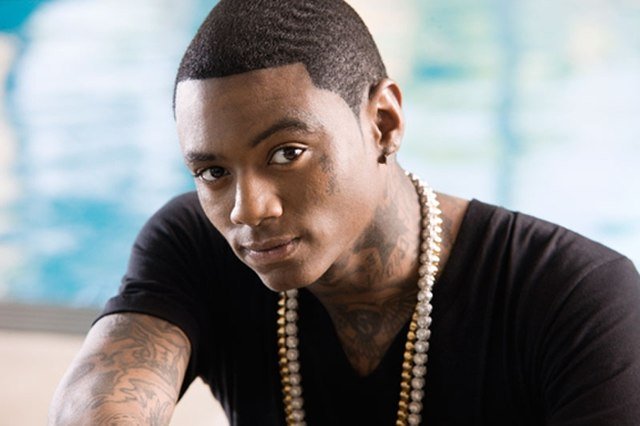
In a plot twist nobody saw coming, Soulja Boy is cranking dat apology to Kandi Burruss, putting an end to their unexpected back-and-forth. The about-face follows his egregiously explicit tirade after an episode of Burruss’ “Speak On It” podcast, where his former videographer shared a story about the rapper allegedly spitting in his food. According to the Grio, the incident in question dates back to 2007, when videographer Charlie Rocket claimed he worked for Soulja Boy in Las Vegas. “Soulja Boy called me to his room,” Rocket began on “Speak On It.” “We’re staying at the Bellagio, and he wanted to make a really viral video. He said, ‘Come to my room. I’m about to order some room service,’ and he ordered $1,000 worth of room service. When he was done, there was so much food left over. I was excited. I saw some chicken fingers and I was like, ‘Can I get those? Cuz I’m hungry, I’m really really hungry.’” Rocket alleged that Soulja told him he could have whatever he wanted—before allegedly spitting on the food. After the podcast clip went viral, Soulja Boy unleashed a furious, profanity-laced livestream targeting both Rocket and Burruss. The rapper denied the claims and threatened legal action, demanding an apology from Kandi for hosting the interview. He insulted the former #RHOA star, calling her names and demanding her address since he was in Atlanta, stating he would “pull up.” “Aye, somebody tag this b*** Kandi too,” Soulja demanded. “B****, why the fk you got this fat n*** on your platform? I’m about to sue the f*** out of Kandi. Somebody tag Kandi. You on the motherf**** Internet claiming I spit in your food, you’sa b***. Who the f*** somebody go on the road with somebody and not eat for three days? And Kandi, f**k you too, you lil’ bald-headed b***,” he stated. Kandi, however, refused to be intimidated, and she quickly turned the threat into an opportunity. “I heard @souljaboy was cussing me out on his live and said he wanted to pull up… Well, I would love for you to pull up. Let’s speak on it!” she wrote on X. Soulja Boy Apologizes, Admits He Overreacted Ultimately, the threats subsided, and Soulja Boy apologized for his behavior. In a subsequent livestream, the rapper walked back his comments, admitting his emotions got the better of him. “Man, I’m sending out an apology to Kandi…You know, I overreact sometimes; I see stuff on the internet. Much love to Kandi. If you can find it in your heart, please accept my apology—much love to you, much respect to you.” He clarified that his true anger was directed at the videographer for “lying” on him, admitting that his friends had advised him, “You should have gotten mad at the dude, you shouldn’t have gotten mad at her. I’ma just let that rock, man.” The post Crank Dat Damage Control: Soulja Boy Apologizes To Kandi After Interview With Ex-Employee Who Alleged He Spit In His Food appeared first on Bossip.

Representative_Hakeem_Jeffries_2012
Featured

Hakeem Jeffries Is Wrong About Many Things, But...

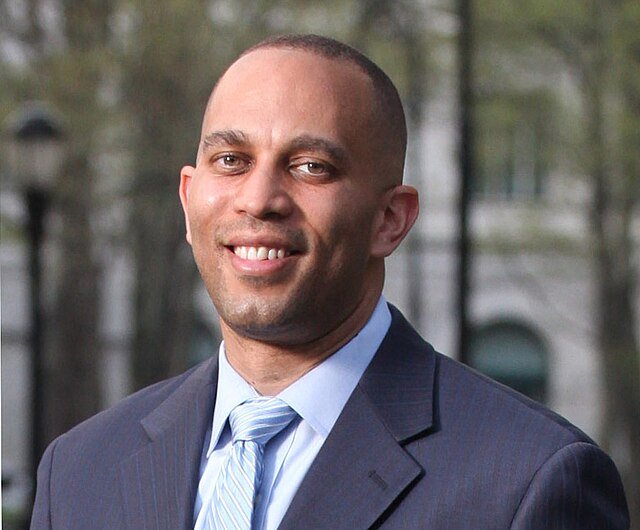
In a recent Zoom meeting with House Minority Leader Hakeem Jeffries, members of the Illinois Senate Black Caucus reminded him of one major obstacle in the ongoing congressional redistricting war between Democrats and Republicans: Black politicians unwilling to sacrifice their power and Black political power collectively for an alleged greater good. This should have long been foreseen by Jeffries and other Democratic leaders, but it is never surprising for Democrats, even the Black ones, to ignore the concerns of Black folks often until it’s damn near too late – and the same goes for the mainstream press corps that covers them. For months now, in addition to efforts led by California Governor Gavin Newsom, Jeffries has reportedly joined other national Democratic officials in pushing legislative leaders in the states of Illinois, Virginia, and Maryland to proceed with plans to redraw their maps to counter efforts in GOP-controlled states like Texas, North Carolina, and Missouri. However, select members of those caucuses were said to have expressed serious reservations, if not flat-out declarations of refusal to sign on, rooted in the belief that the Democratic Party’s plans to block the GOP gerrymandering their way to total seizure of Congress would disproportionally harm Black lawmakers by dismantling their districts. Then came the public warning to Jeffries from state Senator Willie Preston, chair of the Illinois Senate Black Caucus, who told a reporter the caucus won’t back any map that dilutes the Black vote in any historically Black district. “We’re going to fight back,” Preston said. “We just won’t do so at the expense of our own power.” Preston is running to replace Democratic Congresswoman Robin Kelly, who is running for Senate, in one of those districts. It’s not hard to understand why Preston would be pressed about the potential chance of him going to Congress being eradicated for the benefit of some politician who will likely not bear the same shade as him or the majority of his potential constituents. On Monday morning, House Minority Leader Hakeem Jeffries traveled to Illinois to meet with state Democratic lawmakers to urge them to consider a mid-decade redistricting, all the same. While protecting Black representation is absolutely a legitimate concern, true power requires strategic sacrifice, and in the long term, real investment in states across the South. As former Attorney General Eric Holder, who has worked with former President Barack Obama on nonpartisan map-drawing efforts in recent years, explained to the Washington Post recently, “We’re doing things that kind of go against what we talked about [because] we have to preserve our democracy if ultimately we’re going to heal it.” Still, there is a real reason to worry about what the Democrats’ plans mean for Black political power writ large. Former Ohio State Senator Nina Turner warned in August that if both parties engage in partisan redistricting battles, “Black Americans—split between 23 Republican-controlled states (44-45% of the Black population) and 15 Democratic ones (30%)—will see their collective political power diluted.” The looming Supreme Court case, Louisiana v. Callais,  where Supreme Court Justice John Roberts may finally achieve his decades-long crusade to kill the Voting Rights Act, only compounds these fears, as Democrats would be in danger of losing around a dozen majority-minority districts across the South. But that ruling won’t affect the next midterms, and if Democrats retake the House, they can fight whatever terrible decision SCOTUS issues. I question the logic of refusing to relinquish any power when that refusal renders your entire party powerless for a generation. What good is a safe seat in a permanent minority? Furthermore, when it comes to the dilution of Black political power in the South, much as we can blame the GOP for gerrymandering, voter suppression efforts of every variety, and so on, we can also fault the Democrats for not even bothering to do much with the huge Black populations existing within the South. For decades at that! Have writers like me for years not complained about why the Democratic Party hasn’t invested in Black candidates in statewide races in places like Mississippi and North Carolina? Have the candidates themselves, such as former Louisiana Senate candidate and activist Gary Chambers, not pointed out the flawed strategy of ignoring Black voters in the South? Just recently, Chambers told Joy Reid: “There are a million Black folks in Mississippi — you only need 480,000 to show up to flip the state, which $25 million could accomplish.”’ “If Greg Abbott can spend $90 million on one county in Texas,” he argued, “Democrats can’t keep saying the South isn’t worth it.” He is right to argue to Democrats, “If you’re not investing in Louisiana and Mississippi after all the losses everywhere else, you’re not serious about winning.” I’m still old enough to remember a Democratic governor of Texas, and I strongly believe we can bolster Black political power by investing in states where Black people live and are moving to. Given the direction of the next census and the maps that will be drawn thereafter in the coming years, this is the surest survivalist strategy for Democrats anyway. As for what power that might be lost in the meantime, I suspect much of this is rooted in individual politicians and their fears of losing their personal political power, or, if nothing else, having to work a whole lot harder for it. Most politicians of all parties enjoy gerrymandering because it makes it easier for them, and while such luxuries aren’t often afforded to Black people, I couldn’t care less about any Black politician ultimately pressed about their power at the expense of everyone else’s. It’s OK for members of the CBC who have had cushy seats for decades that have largely gone unchallenged to work a bit harder. I don’t have a lot of faith in the charms of Hakeem Jeffries to convince those in doubt about all this, but for all the many-many-many-many political stances I disagree with him on, redistricting isn’t it. This is a one-time opportunity to

Hitler_saluting_the_SA
Featured

White Man In Full Nazi Uniform Arrested After...

Here’s a question — a series of questions, actually: Are white men OK? Is the white supremacy in the air just extra thick this Halloween? Has the current administration made the Gestapo look cool again? It’s almost 2026 — what’s with all the self-proclaimed Nazis? Last Thursday night, a white man showed up to an off-campus bar near the University of Georgia in Athens dressed in full Nazi regalia, and now he’s been arrested for striking a female student in the face with a beer mug after being confronted by patrons who did not want the Nazi cosplayer entering the bar. It simply can’t be emphasized more that 33-year-old Kenneth Leland Morgan — who, according to NBC News, was first identified by the victim, 23-year-old UGA student Grace Lang— didn’t just show up outside Cutters Pub in plain clothes, waving a swastika flag and drunkenly shouting out “Heil Hitler” like a normal 21st-century Nazi. Nah, this guy came out in a full, seemingly authentic Nazi officer’s uniform, looking like he came straight from the set of Quentin Tarantino’s “Inglorious Basterds.” Where does one even get a real Nazi uniform in 2025? Either there’s some kind of “Third Reichs ‘R’ Us” store open in Georgia, or somebody’s grandpa who somehow escaped the Nuremberg trials after World War II needs to check their closet to see what’s missing. What does seem to be perfectly clear is that Morgan was out with the sole intention of pissing people off by wearing his white supremacist bigotry literally right on his sleeve. From NBC: Lang said she knows of Morgan through a friend of a friend and that he is known in her circles and around town. Lang said two of her friends, one of whom is Jewish, first confronted the man. “She was mainly just telling him he needed to leave and needed to go home,” Lang said. Video of the encounter shows the man walking around with a beer mug and swinging it at a woman, seemingly striking her in the face as she goes down.Lang said she got hit by the beer mug after trying to grab the man’s swastika armband. “He was just feeling very proud of himself for what he was wearing,” said Lang, who said she got four stitches for cuts to her face. If you listen closely, you can already hear the sounds of millions of basement-dwelling, incellustrious, Nazi-loving MAGA bros tapping away at their keyboards to say the Nazi acted in self-defense and the woman deserved to get hit for reaching for his swastika-clad arm. Considering the fact that even top members of the Trump administration have shown that they will stretch themselves into noose knots to justify the activities of white supremacists and then complain about being called white supremacists, we shouldn’t be surprised if Morgan is the next white guy over 30 to have Vice President JD Vance claiming he was just doing “what kids do.“ Anyway, according to Athens-Clarke County jail records, Morgan was arrested early Friday and booked on suspicion of two misdemeanor counts of simple battery and one felony count of aggravated assault. It’s unclear if he has a lawyer. In a statement, UGA accused Morgan of “heinous antisemitic behavior,” NBC reported. “We are horrified by the actions of an individual who, while in downtown Athens wearing a Nazi uniform, assaulted a female University of Georgia student,” the statement read. “The man is not a student and is not affiliated with the University. His actions, which were caught on videotape, are appalling, and we are grateful to Athens-Clarke County police officers for swiftly apprehending and arresting him.” It’s a shame. American white supremacy inspired Germany’s Nazi movement, and now America clearly has a Nazi problem it just doesn’t want to confront head-on. Sad. SEE ALSO: ‘What Up, My Nazi?’ Is Fox News Mimicking Black Reclamation Professor Posts Blackface Photo And Keeps Her Job  

640px-Technical_college_students
Featured

Student Fears Dominate Washington, D.C., Education

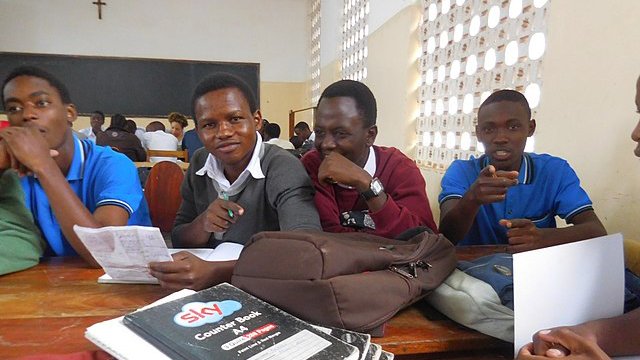
What began as a routine discussion over how to spend a $30,000 student engagement budget quickly turned into a sobering look at fear, mistrust, and the limits of safety in Washington, D.C., schools. At a recent meeting of the D.C. State Board of Education’s Committee on Student Experience and Engagement, the conversation veered sharply when students described feeling anxious about the presence of Immigration and Customs Enforcement (ICE) near school grounds. Students told the board that seeing ICE agents near their schools makes them panic, even when they’re not the target. They described the presence of law enforcement as a constant source of anxiety. One student representative said that “a majority of the emojis students created expressed negative emotions. Students feel upset, concerned, or unsafe when ICE is around our schools.” The comment struck a nerve. Committee chair Eric Goulet said the reaction was “not surprising,” warning that the presence of masked federal agents “erodes trust” between students and institutions. He cited reports of ICE detaining parents near Bancroft Elementary as particularly alarming. Those fears aren’t unfounded. In March 2025, federal agents attempted to detain a health-care worker at H.D. Cooke Elementary School while students were arriving. The agents left only after administrators demanded a warrant. Earlier this year, parents and daycare staff in Northwest D.C. reported unmarked SUVs and plain-clothes officers outside bilingual childcare centers, sparking panic among immigrant families. While D.C. has recently shown modest progress on attendance — its in-seat rate climbed to 87.4% last school year, and chronic absenteeism dropped to 36.9%— more than 1 in 4 students across the district still miss significant class time. Nationally, studies show that immigration enforcement can drive attendance even lower. In districts hit by ICE raids, daily absences spiked by about 22%, with the sharpest increases among elementary-age students. Research from the Kaiser Family Foundation and the Learning Policy Institute confirms that heightened immigration enforcement correlates with chronic absenteeism, school withdrawals, and declines in academic performance. In other words, the panic students describe in D.C. isn’t isolated; it’s part of a measurable, nationwide chilling effect that turns fear into lost learning. Some neighborhoods have even organized “walking school buses,” community escorts to help children travel safely to class after witnessing federal agents detain a parent in front of students. Educators say the heightened enforcement has already begun affecting attendance and the sense of security inside classrooms, according to WTOP News. “The way to make students feel safer is to build trust,” Goulet said. “Actions like these do the opposite.” Across the country, similar stories are unfolding in immigrant communities where schools are meant to be sanctuaries but often feel like extensions of law enforcement. In D.C., where foreign-born residents make up nearly 14% of the population, students say the presence of ICE near schools fuels anxiety. Studies suggest that enforcement near schools can reduce attendance, especially among Latino students. The ICE discussion overshadowed what was supposed to be a planning session about student engagement and safety initiatives. The committee, working with a $30,000 budget, had been debating how to increase student participation in civic events, from listening sessions to a possible citywide student summit in March. Only three students had shown up to the previous town hall, despite 18 signing up, a turnout that underscored how mistrust and fatigue are already eroding civic involvement. The attendance failure is evidence of the deeper emotional disengagement created by fear and disillusionment. It’s not just that students are afraid of ICE; it’s that the system built to hear them is operating on a shoestring and struggling to get them in the room. Student Representative Kayla Chamberlin suggested offering community service hours as an incentive to draw more young people in. Others proposed smaller ward-based meetings, partnerships with youth groups, and translation services for families who don’t speak English. “We’d hit the whole city,” said Ward 8 Representative Lajoy Johnson, arguing for events in every ward. But beneath the logistics and policy talk was a more existential question: how do schools protect students from fear when the threat isn’t inside the classroom but waiting just beyond its doors? The conversation expanded to youth curfews and law enforcement visibility—issues that carry similar undertones of mistrust. “We don’t want young people encountering the criminal justice system just for returning from a school event,” Goulet said. By the meeting’s end, members had pledged to translate student feedback into tangible action to ensure that safety planning addresses not just physical threats but emotional ones. “It’s about making sure what students say doesn’t just get heard and it gets acted on,” said Rep. Dinkins. For D.C. students, that action can’t come soon enough. The challenge now facing the city, and districts nationwide, is proving that safety and belonging can’t be legislated into existence; they have to be built. Zoe Cummings is a senior honors journalism major, Spanish minor at Howard University, covering HBCU news, politics, and culture. You can follow her on Instagram @zoesxphia. Grant Roundtree is a senior journalism major, political science minor at Howard University. He is interested in stories about culture, sports, politics, and issues affecting local communities. He can be reached on Instagram at @grantroundtree. SEE ALSO: Ethiopian Immigrants Live With Fear, Anxiety In Washington Howard Students Hustle To Stay Enrolled After Federal Aid Cap

Boris Kodjoe_Studio189_(cropped)
Featured

Boris Kodjoe Talks Dealing With Racism As A...

Boris Kodjoe may be eternally fine, but his experiences as a visibly Black biracial child were anything but. In a sit-down on the Pivot podcast, the actor opened up about his difficult upbringing in Germany. In response to a question about what his experience was like being raised by his white mother in a predominantly white country, Kodjoe gave a vulnerable and honest answer. “There’s ignorance and misinformation and fear,” he said. “Because that’s really where it comes from. I was faced with racism and bullies every single day growing up in Germany because I was different. Kids reaching out grabbing my hair, rubbing your skin to see if it’s real, asking if we live on trees in Africa. Just the most ignorant, dumb things based on, again, misinformation and fear.” He continued, “On top of it, my mother’s white. My father’s from Ghana. But my dad left when I was between three and four years old. So, it was just my mom and me and my brother. So, I always felt different and you know when you’re a child, all you want is to be just like everybody else. You want to belong. You want to fit in. And without my father there, it made it so much harder because I didn’t have anybody to relate to. I didn’t have somebody to protect me. I didn’t have somebody to explain to me what this was. I think my mother did an extremely admirable job in putting a sense of pride and a sense of confidence in us.” He also chatted about how he felt when his father abandoned their family and how it shaped his approach to both manhood and parenting. “When I was in first grade, in maybe kindergarten, they tell you to paint a picture of what you want to be when you get old and become an adult,” he said. “Everybody wanted to be firefighters and athletes, I wrote down I wanted to be a father. So, that was my goal. I didn’t have one present and I knew what it felt like to be disappointed and to feel abandoned.” He continued, “When my father left, he told me ‘take care of your mother and your brother’, I was five years old and I took that to heart. And it f***ed me up for 30 years because I thought if I do a good job, he’ll come back. And he never came back. So, I thought, ‘oh, this is my fault, I didn’t do a good job.’ I carried that with me for a long time. So, all of that had a huge impact on me as a father because I knew how important it was to be present for the kids at all time and I wanted them to feel safe. I wanted them to feel loved. I wanted them to feel validated. I wanted them to feel empowered. Thankfully, we got a second chance with my dad because my daughter had these issues and he was a doctor. My mother called him and the next day he showed up to my house in LA. Kodjoe went on to say that though he hadn’t seen his father since the day he left their family, that he would spend the final 10 years of his life making up for the lost time and forging a relationship with his and Nicole Ari Parker’s children. Watch the touching episode below: The post ‘Rubbing Your Skin To See If It’s Real’: Boris Kodjoe Talks Dealing With Racism As A Child In Germany appeared first on Bossip.

king_george
Artist Spotlight, Featured

King George: The Southern Soul Voice You Need...

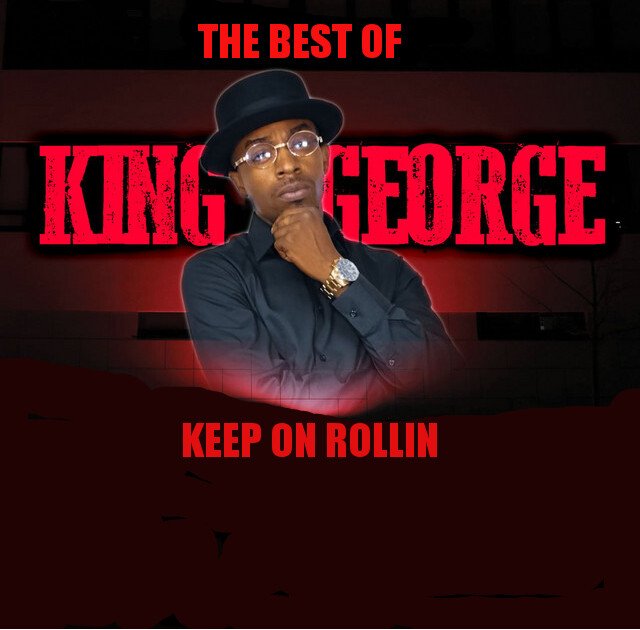
Introduction If you’re into soulful grooves, authentic R&B energy, and the pure feel of the South, then King George is one artist you should have on your radar. Based in Hopkins, South Carolina, he combines old-school flair with contemporary southern soul energy. iHeart+1 In this post, we’ll dive into: his background, signature sound, standout tracks, why he matters in southern soul today, and how to stay connected with his music. Background & Journey Growing up in Mississippi and relocating to South Carolina, King George has deep roots in the traditions of gospel-tinged soul and the Southern music scene. Famous Birthdays+2Facebook+2He officially began releasing music around 2020, quickly gaining traction with songs like “Leave & Party” and “Friday Night.” iHeart+1His breakout moment came with the single “Keep On Rollin” (2022), which amassed millions of streams and introduced his vibe to a wider audience. YouTube+1 Signature Style & Sound What makes King George distinct: A smooth vocal delivery that nods to the past while feeling fresh. iHeart Lyrics centered around good times, relationships, and the kind of weekend energy you feel in the South. iHeart+1 Production that blends party-centric R&B with the emotional weight of southern soul—making his tracks both fun and deeply resonant. Apple Music – Web Player+1 Must-Listen Tracks Here are a few standout songs to get started with: “Keep On Rollin” – The 2022 single that helped put him on the map. YouTube+1 “Too Long” – A heartfelt track that showcases his emotional range. YouTube+1 “Leave & Party” – A feel-good weekend anthem rooted in southern soul energy. YouTube+1 “Baby If I” – A newer release, smooth and soulful, perfect for slower moods. YouTube Why He Matters in Southern Soul Today The southern soul genre has always been about authenticity, feeling, and connection. And King George is carrying that tradition forward by: Reviving the sound of 1990s influenced R&B mixed with modern southern soul vibes. iHeart+1 Bridging the gap between party tracks and emotional ballads—making his music versatile for both feel-good and introspective moods. Gaining traction in an era where soul and R&B can sometimes get overly polished, he brings back rawness and realness. On Reddit one fan noted: “One of the top (if not the top) southern soul artist, King George, is getting more and more popular…” reddit.com Where to Find Him & What’s Next Streaming platforms: His catalog is available on major services via Apple Music and others. Apple Music – Web Player Social media: Instagram handle @803kinggeorge for updates, behind-the-scenes content, and show info. Instagram+1 Live shows: He’s touring and appearing at southern soul events; keep an eye on ticketing sites for upcoming dates. Ticketmaster Final Thoughts If you’re exploring the world of modern southern soul and want an artist who combines party energy with emotional depth, King George is a worthy listen. His tracks feel rooted in tradition yet fresh for today’s scene. Add his music to your rotation, and keep an ear out—he’s one of the voices pushing southern soul forward.

SDCC_2015_-_Keke_Palmer_(19779941845)
News

Keke Palmer & Nakia Stephens Speak Out Amid...

Keke Palmer and screenwriter Nakia Stephens have joined forces to bring a new original series, Southern Fried Rice, to Palmer’s KeyTV platform, a digital media network dedicated to uplifting Black stories and creatives. But since the show’s release, social media users have been divided over its unique plotline, which centers on an Asian American character. Premiering its first two episodes on Oct. 22, Southern Fried Rice follows an Asian American woman, Koko Johnson, played by Page Yang, as she explores her identity and culture while growing up with Southern Black parents. The themes collide when Koko attends Wright University, a prestigious fictional HBCU in Atlanta, and her late father’s alma mater. There, she faces questions of belonging and self-discovery, according to Complex. The cast also includes Kordell Beckham, Choyce Brown, Ashley India, Jada Lewis, and Shaun Rose. Palmer described the project as embodying her network’s mission— a story that celebrates “diverse realities while still being full of humor, love, and heart.” Yet, not everyone online agreed with the actress’s ethos. Reactions to Southern Fried Rice have been mixed. After the trailer and first two episodes dropped, some social media users voiced frustration. On X, one user wrote that the show’s lead should have been a Black actress, given its HBCU setting and KeyTV’s mission to center Black stories. “Black women aren’t a monolith; they could’ve easily made it about the transformation you go through experiencing an HBCU. Esp if said BW went to a PWI. This just looks like a sloppy attempt to force diversity in a show when black people have to beg for one supp-role elsewhere,” the user penned. Another added: “I think the obvious issue is, there is literally no need for the main character at an HBCU to be asian???” Some users said the show pulled influence from the real-life story of Cindy Wilson. Some users also pointed out similarities between Stephens’ show and the real-life story of writer Cindy Wilson, a Korean-born woman adopted by a Black family in Mississippi. Wilson, who detailed her journey in her 2018 memoir Too Much Soul, wrote about growing up in Jackson, Mississippi, after being adopted from Seoul, South Korea. “See how she fights and loves her way through life as she searches for her identity and discovers her place in the world despite the strongholds that society tries to place on her,” the book’s description reads. Several people online accused Stephens of failing to give Wilson proper credit. Still, other viewers embraced the series’ unconventional storyline. One person on X wrote: “I know plenty of non POC that went to HBCUs that received scholarships for being a minority, so I’m interested in seeing how this turns out.” Another viewer appreciated the show’s approach to cultural representation, saying: “Am I the only one open to the idea of this? I watched the trailer and the main character is tastefully written (w/o a Blaccent) and there are plenty of Black women and men within the show.” Keke Palmer and Nakia Stephens chimed in on the discourse. As the controversy spread, both Palmer and Stephens addressed the conversation directly. In a video shared on Oct. 23, Palmer spoke out to clarify the intentions behind Southern Fried Rice and to spotlight the Black creatives involved in the project, including Stephens, whom she has invested almost half a million dollars in over the years for previous shows on KeyTV. “I wanted to chop it up real quick about this series called ‘Southern Fried Rice’ that’s premiering on KeyTV, which is receiving some controversial feedback. Now, Southern Fried Rice was created by Nakia Stephens. While I can’t speak to her inspiration for the show, I can speak to her dedication as a creative,” Palmer said in a video posted on social media. “Nakia has written, showran, and produced four shows alongside her Damn Write Originals team with KeyTV, and KeyTV has proudly invested over half a million dollars in her creations. And I say that because it’s not easy to obtain that kind of investment.” She continued: “[At] KeyTV, that is the ethos of the company. It’s a network, not just because it has stars and shows or has talent, but because it’s about the people who create the shows and connecting them.” Keke Palmer went on to name other Black creatives KeyTV has supported, including Antwan Lawshe, Eric & Rosero McCoy, and Chelsea Sanders, adding: “Look, what you like is subjective, but the support of Black creatives is not, and it’s a task that KeyTV takes on with pride. Because if you want to be a creative, you have to be able to create, and that takes money, and it’s KeyTV’s mission to find the funds for you to be in practice, for you to experience trial and error, and to take your projects off the page and get more than one chance to do it in action. So, whether you like it all or some or none, I say, give these creators a chance to grow as we continue to grow in supporting them.” Stephens also spoke up, posting a message on Instagram that same day. “I welcome conversation. I welcome curiosity,” she shared. “Our ultimate goal was to spark conversation around culture, around belonging and identity, and so that’s what I think I’ve done.” She added that the show had been a decade in the making and was deeply personal: “Southern Fried Rice is 10-plus years in the making, and it was inspired by my own HBCU experience and observations as a student at Savannah State University, the first public HBCU in Georgia,” she explained. “I had friends at Savannah State University. And people in my orbit who were non-Black and had to navigate a historically Black space, and I saw how hard and challenging and fun and beautiful it was for them to do so, and that sparked my curiosity and honestly planted the seed for Southern Fried Rice.” Have you seen Southern Fried Rice yet? Tell us your thoughts about

Supplemental_Nutrition_Assistance_Program_logo.svg
News

What Happens If SNAP Stops? What You Should...

The U.S. Department of Agriculture’s Food and Nutrition Services has warned that there may be insufficient funds to pay November benefits through the federal Supplemental Nutrition Assistance Program (SNAP), which provides food assistance to roughly 42 million Americans nationwide. On Oct. 10, the USDA informed every state that, because of the government shutdown, it must pause sending November SNAP payments. This means states can’t send payment files to the companies that load money onto Electronic Benefit Transfer (EBT) cards until they get new instructions. The order applies to all SNAP benefits, including regular monthly payments and any daily updates. That means, beginning Nov. 1, SNAP recipients may not be able to access any unused benefits on their EBT cards or receive new benefits. Some states, like New Hampshire and Louisiana, have advised recipients to use their remaining funds before Oct. 31, should the shutdown continue past the deadline. If the shutdown continues, the risk is severe. November SNAP benefits could be delayed, reduced, or canceled altogether nationwide, leaving millions of low-income families without funds to purchase food. The impending deadline also impacts schools. As previously reported, schools that rely on federal funding to provide free or reduced-price lunches to students are at risk. While the USDA sent states a contingency plan ahead of the shutdown outlining which funds could be used to provide meals, it has not confirmed whether it will advance additional funds if the shutdown stretches into November. How are states responding to the impending SNAP pause caused by the government shutdown? The funding crisis has already caused major disruptions. According to CNN, 17 states have stopped accepting new SNAP applications because their systems cannot merge partial October payments with November’s benefits. States able to separate the two months are continuing to issue October assistance to new enrollees, but most are bracing for major delays. State responses vary depending on local resources. States like New Jersey, California, and Texas have already warned that November benefits may be delayed or canceled if the government shutdown continues past Nov. 1. In Pennsylvania, recipients have been notified that no November benefits will be distributed until the government reopens. In New York, officials say the shutdown will not immediately impact SNAP benefits, and households will continue receiving assistance as usual through the end of October 2025. Applications remain open online and in person, and recipients can use their EBT cards at any participating retailer or farmers market. The state has not yet received federal guidance about November benefits, but promises to update residents as soon as possible. New Hampshire, meanwhile, has partnered with the state food bank to expand its mobile food pantry program to as many as 20 locations for SNAP participants, amid the crisis. These additional food pantries will operate for five weeks or until benefits resume. The state has also secured extra funding to sustain the Women, Infants, and Children (WIC) program until at least Nov. 7, though some locations may be forced to pause services if the shutdown continues into November. The government is required to use “lapse funding” if the shutdown extends past Nov. 1 to keep SNAP benefits available.  Federal agencies typically develop “lapse of funding” plans to prepare for shutdowns, and the USDA’s current plan indicates that contingency funds could be used to temporarily sustain SNAP, according to the Center on Budget and Policy Priorities. However, the agency has not confirmed whether it will tap into these funds, which are estimated to total between $5 billion and $6 billion—enough to cover most, but not all, of the roughly $8 billion needed to fund November benefits. The federal government is legally obligated to release these contingency funds, but unless that happens soon, millions of Americans could face food insecurity within weeks. What can you do to protect yourself? Overall, the situation is dire. If the shutdown persists and funding remains frozen, SNAP recipients may lose access to their benefits, schools could struggle to provide meals, and local food banks will face mounting pressure to fill the gap. States continue to urge residents to use existing benefits before the end of October, monitor official updates, and seek community food assistance if needed. Joining a local food bank could also help to supplement if SNAP benefits pause during the shutdown. Find a local food bank near you, using Feeding America’s search engine here.  SEE MORE: When The Government Starves Us: How SNAP Cuts Target Black Survival SNAP Benefits Ending As Hunger Cliff Looms

News

Stephen A. Smith, The Aaron Burr Of Black...

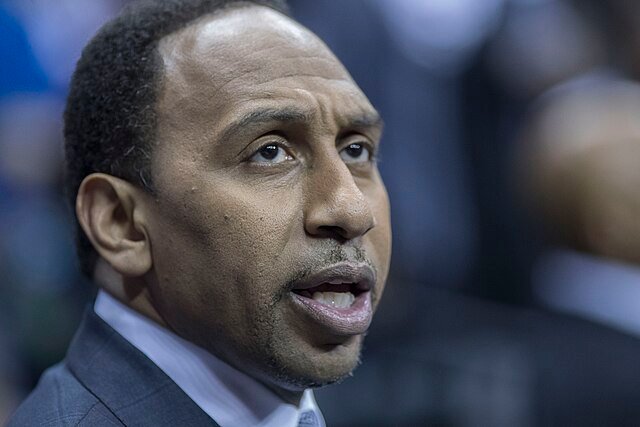
Stephen A. Smith is the Aaron Burr of Black men. OK, admittedly, I don’t know anything about Aaron Burr that I didn’t either learn from Lin-Manuel Miranda’s Broadway musical Hamilton or that one “Got Milk?” commercial from the ’90s. So, when I say famed sports analyst Stephen A. Smith is the Aaron Burr of Black men, I’m assuming the real-life Aaron Burr is similar to the go-which-ever-way-the-political-wind-blows version of Aaron Burr in Miranda’s play, who is actually played by a Black man. But, anyway, what I’m really trying to say here is I wish Stephen A. Smith would STFU forever and always. During a special edition of his podcast show Straight Shooter with Stephen A., Smith apologized to Rep. Jasmine Crockett, whom he scolded earlier this month for how she “expresses herself” regarding President Donald Trump and his policies, and then later doubled down on his criticism of her “rhetoric for the streets.” “Is that gonna help your district in Texas? Aren’t you there to find a way to get stuff done, as opposed to just being an impediment to what…Trump wants? How much work goes into that? I’m just going to go off about Trump, cuss him out every chance I get, say the most derogatory, incendiary things imaginable, and that’s my day’s work,” Smith said at the time. “That ain’t work,” he continued. “Work is saying that’s the man in power. I know what his agenda is. I’m not exactly in a position to stop him, since the Republicans have the Senate and the House, but maybe if I’m willing to work with this man, I might get something out of it for my constituency.” Smith should absolutely be ashamed of being this loud and wrong with his chest poked out further than his forehead. Imagine paying so little attention to the current political landscape that you believe, in the first place, that an authoritarian ruler like Trump — who has expressed out loud his intent to shut down and defund all things Democrat — can be worked with. Secondly, is this man really going to stand there and speak about Crockett’s straightforwardness and refusal to mince words with Trump, who has, for as long as he has been in the political arena, never passed up a chance to chuck personal insults and crass language at his political rivals, reserving the most racist, misogynistic and intellectually demeaning insults for Black women who are observably much smarter than him? Well, it appears Smith has come to glory on that part. “I saw something disturbing in regards to President Donald Trump and how he came at Representative Jasmine Crockett…I get it now with Trump feeding into that nonsense, giving him ammunition to continue to go out there and talk about our Black women that way—I got it,” Smith said, without getting into any specifics about which of the numerous times Trump has come at Crockett changed his thick-a** mind. “When Trump came at her like that, I said, ‘Damn it.’ I was pissed off because I said that’s what they’re talking about when they’re saying, ‘You know what, when you question something about her, it’s going to invite that,’” Smith explained, again, without specifying which remarks he’s even talking about. “I can look Jasmine Crockett in the face and say I’m sorry for any…kind of noise I caused in your direction, because she is accomplished, and she is smart, and she does have an incredible, incredible challenge working in this political climate on Capitol Hill,” Smith continued. Nah, let’s be real about what’s going on here. Smith popped off at Crockett, armed with misogynoir, respectability politics, and his typical, observable cluelessness about what kind of man our president is, and instead of getting the public agreement he was shooting for, he’s been getting dragged by the negro-net for more than a week. So now, Smith is bringing his tap dance back around, full circle, and apologizing to Crockett, while probably hoping we all forget this is far from the first time he has thrown on a cape for the orangey-white nationalist who is currently demolishing the White House both literally and symbolically. This is where the Aaron Burr comparison comes in. Depending on which position is more popular and convenient at the moment, Smith will be defending Trump against allegations of anti-Black racism one day, and calling out Black conservatives like professed “MAGA guy” Jason Whitlock for being the self-loathing “piece of sh*t” grifter he is the next. The man is just plain wishy-washy. Stephen A. Smith is the Van Jones of Black men who manage to have even more useless political takes than Van Jones. And, look, we can’t let Smith slide for piling on to the mountain of racist, Black woman-hating vitriol that is already spewed against Crockett by white bigots of the MAGA world on a daily basis. In the last year alone, Crockett has been called “ghetto,” a “fake ghetto hoodrat,” a “ghetto Black b*tch,” a wannabe “gangsta” who “wants you to think she’s from the hood,” and a “fraud” who is only pretending to be of the Black community, but is too educated to actually be of the Black community. She’s been called all of these things by racist white people who are only speaking about her like this because she’s a blunt, outspoken Black woman who sounds authentically like a Black woman when she speaks. Smith, on the other hand, is a Black man who was birthed and presumably raised by a Black woman in a family and community full of Black women, and he should know better. Nah, let him keep his apology. He’ll be back on the other side next week anyway. SEE ALSO: Loud & Wrong? Stephen A. Smith Dragged On X For Defending Donald Trump’s Claims Of ‘Black People Relating To Him‘ Why Stephen A. Smith’s Rant About Jason Whitlock Didn’t Go Far Enough

News

Federal Workers Line Up For Food Drive Amid...

The government shutdown has entered its third week, and federal workers are feeling the strain more and more. On Tuesday, a food drive intended to help furloughed federal workers had lines wrapped around the building as they go nearly a month without pay. According to CNN, Capital Area Food Bank partnered with No Limits Outreach Ministries to host the food drive in Landover, Maryland. The event was exclusively for federal workers and required participants to show their work ID to receive food. Capital Area Food Bank said they helped 370 households, which was double the number of federal workers they were expecting. “I’m overwhelmed by the line,” Oliver Carter, the pastor at No Limits Outreach Ministries and organizer of the event, told CNN. “I didn’t think we were going to have this many federal employees.” The timing was less than ideal for the food bank, as some of their federal funding has been slashed this year. “It’s a perfect storm of increased need in our community and throughout the country,” the food bank CEO, Radha Muthiah, told WAMU. “At the very same time, we’ve got reduced sources of food supply.” “I can’t believe I’m here,” Rolanda Williams, who works in the Social Security Administration, told CNN while standing in line at the food drive. “You always thought that getting a government job or you know, a federal job, that that’s security, and it’s not,” Williams added. The government shutdown began at the beginning of October as a result of Senate Democrats refusing to vote in favor of a short-term spending bill unless Republicans extended insurance subsidies provided through the Affordable Care Act (ACA). While Republicans currently hold the majority in the House and Senate, spending bills need 60 votes to pass. With Republicans only controlling 53 seats in the Senate, Democrats have rare leverage to negotiate with the ruling party. Republicans have refused to even negotiate extending the subsidies. Senate Majority Leader John Thune has only offered a potential vote on extending the subsidies after the shutdown ends. Considering the fact that Republicans let the subsidies expire and that repealing the ACA has long been one of their goals, the offer isn’t really a compromise when the outcome is likely to be a no. Without the subsidies in place, monthly premiums for ACA insurance are projected to go up by 75%. As a result, millions of Americans are projected to become uninsured next year as a result of being unable to afford the monthly payments. As of Wednesday, this has officially become the second-longest government shutdown. With no clear end in sight, the situation has only grown more stressful for the affected federal workers, many of whom are expected to work without pay through the government shutdown. “I’ve not been in this predicament ever. I served 21 years in the military. I’ve been a federal government employee for the past two years. The reason I wanted to become a federal government employee was stability. That stability, that rug, if you will, has been snatched away from us,” a federal employee who asked to remain anonymous for fear of losing her job told NBC News. “With my rent due next week, I can take anything I can get,” Summer Kerksick, a federal contractor and market research analyst with the Rural Export Center in the U.S. Department of Commerce, told CNN. “I haven’t gotten a paycheck this month, so the free groceries is very important, very helpful,” she added. “I’ve got to save every dime at this point.” So we’ve got federal workers being unable to feed their families as a result of the GOP being unwilling to make health care affordable for millions of Americans. But America first, right? SEE ALSO: Here’s Where We Are In The Current Government Shutdown Federal Workforce Layoffs Begin Amid Government Shutdown Mike Johnson Says Government Shutdown Could Be Longest Ever Food Stamps At Risk As Government Shutdown Continues When The Government Starves Us: How SNAP Cuts Target Black Survival

Scroll to Top